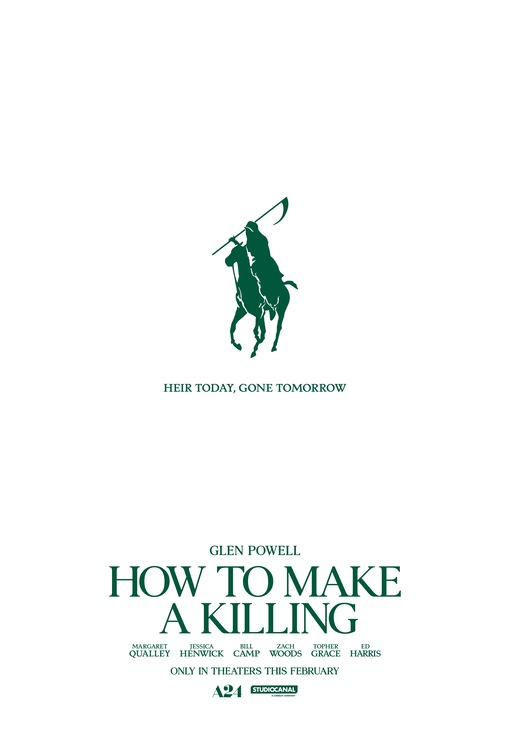
A fortune built on bodies, undone by the one person who played the game better. The setup is classical, almost operatic in its ambition: Becket, narrating from the shadow of his own execution, walks us through a methodical climb toward a $28 billion inheritance, one relative at a time. We know where it ends before it begins — and the film seems to know we know. That self-awareness is both its sharpest asset and its most persistent liability.
The Tragedy of Momentum
What’s genuinely interesting about How to Make a Killing is that it resists being a pure power fantasy. Becket isn’t a sociopath running on empty malice. He retains real gratitude toward Warren, the man who gave him a foothold in life, and notably never raises a hand against him — Warren exits via cardiac arrest, conveniently self-arranged. His final kill, Whiteclaw, comes by way of self-defence, arrows flying in a struggle Becket didn’t initiate. The film nudges you to wonder: at what point did he want out? The killings escalate not from bloodlust but from momentum, each one making the next feel inevitable. That’s a genuinely tragic construction.
Julia
The real villain, and the film’s most fascinating character, is Julia. She never commits a murder. She doesn’t need to. She reads Becket completely, leverages his exposure, extracts a fortune through blackmail, and then — in an act of breathtaking cold calculation — conceals her husband’s suicide note (my read: he felt humiliated and used his own letter opener) to ensure Becket is prosecuted for a death he had no hand in. She gets the money. She gets the freedom. She wins. That the film gives us such a precise, calculating female antagonist and doesn’t quite know what to do with the moral weight of her victory is, honestly, its biggest missed opportunity.
Where It Falters
Because for all the elegance of that central irony — Becket prosecuted for the one killing he didn’t do — the film struggles to sustain the energy required to earn it. The “next relative” structure starts feeling procedural around the midpoint, a conveyor belt of elimination that the script can’t find enough variation within to keep momentum building. You want escalation; you get repetition with diminishing returns. The tonal commitment wavers too: pitched as black comedy, the film never quite trusts its own darkness enough to be funny, nor grounds itself enough in psychology to land as a thriller. The murders read more as a formal device than as a source of dread or genuine wit.
Supporting performances pick up the slack in isolated bursts — the film comes alive whenever someone other than its studied lead is allowed to be genuinely unhinged — but that injection of energy only underscores the flatness elsewhere.
The Ending
What you’re left with is a film that lands somewhere genuinely ambiguous: Becket gets the money and loses everything, Julia gets everything and deserves none of it, and the audience exits not quite satisfied, not quite cheated. Whether that moral murkiness is a feature or a flaw probably depends on your patience for stories that refuse to punish their worst people cleanly. I find myself admiring the ending more than I enjoyed getting there.
Decent, and occasionally more than that. But it wanted to be wicked. It only made it to clever.